Korea Forecasts Autumn Leaves Like the Weather. Here's How to Plan Around It.
Autumn colour starts at the summits and comes down. Seoraksan logged its first colour on September 28; Bukhansan, inside Seoul, is still weeks away. Here's how to pick your week, get to both mountains, and eat well in Gangwon.
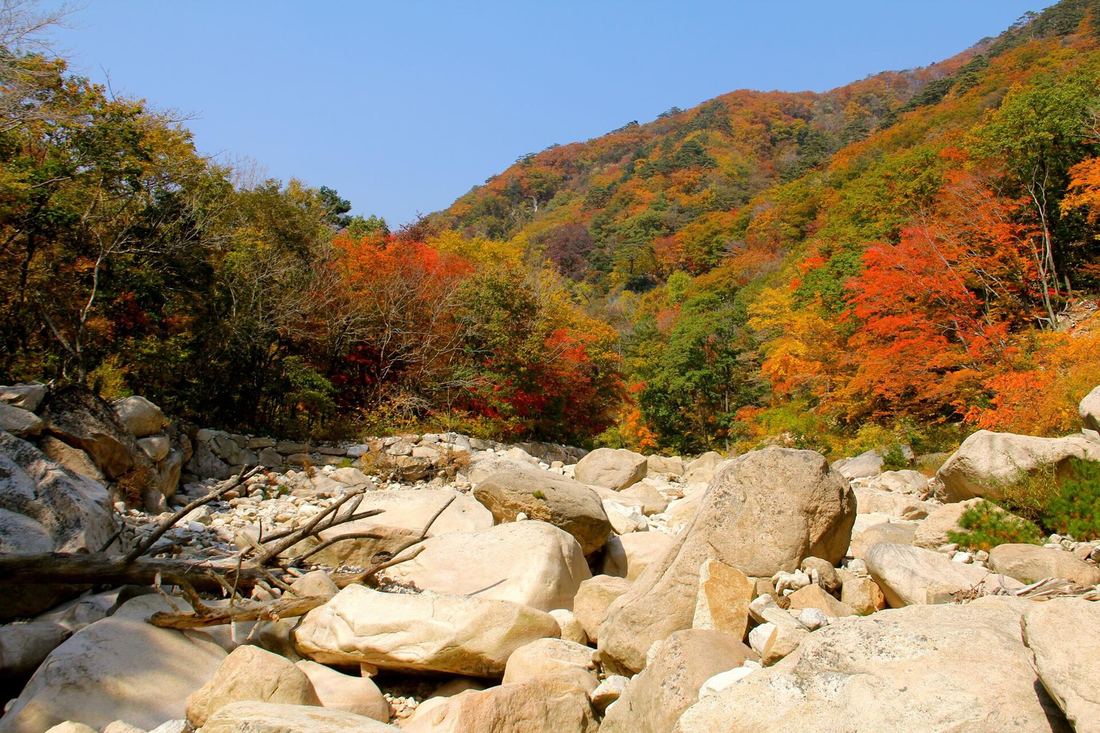
Right Now: Seoraksan Has Started to Turn, Seoul Hasn't
Koreans follow autumn colour the way other countries follow rain. Two government agencies publish it mountain by mountain, and the rule underneath is simple: the colour comes down from the summit. That makes the week you go matter more than the mountain you pick. This guide goes with Mori's latest video, and everything below is as of September 28, 2026.
- September 28: the KMA's Gangwon office logged first colour on Seoraksan (1,708 m), on the average date and four days earlier than last year. KMA's page still listed Bukhansan, inside Seoul, as before colour.
- Bukhansan's average first-colour date is October 15. Last year it arrived October 22.
- The Korea Forest Service forecasts Seoraksan's peak for October 20 and ginkgo trees nationwide for October 30.
- Seoraksan's cable car takes no advance bookings: same-day tickets only, 16,000 won round trip for adults.
- Renting gear at Seoul's hiking centre near Bukhansan costs money and the centre is closed on Mondays.
Why Korea Can Forecast Colour Like the Weather
First colour is an official measurement here, not a feeling, and it is built to be read from the top of the mountain down.
Two Agencies, Twenty-One Mountains
The KMA watches 21 well-known mountains and posts dated photos for each on its Weather Nuri site (Korean only), marking every mountain as before colour, first colour or peak. It counts first colour when about 20% of a mountain has turned, counted from the summit down, and peak at about 80%. The Korea Forest Service publishes its own peak forecast map, and counts a peak at 50% or more, so the two agencies' peak dates are not directly comparable.
The top-down rule is built into the measuring. KMA's observation guide places the first-colour line at about 1,394 m on Seoraksan and about 696 m on Bukhansan, a fifth of the way down from each summit to its base observation point.
Height Sets the Order, and Latitude Adds to It
Colour does drift south across the country too. A 2013 KMA forecast put the gap between Seoraksan and Duryunsan, in Haenam on the southwest coast, at about a month. Between these two peaks, though, height does most of the work. Seoraksan's summit sits only about half a degree of latitude, roughly 50 km, north of Bukhansan's (from Wikipedia's coordinates), yet its average first-colour date comes 17 days earlier, and last year the gap was 20 days. In its 2023 Bukhansan report, Aju News said colour usually starts once the daily minimum falls to 5°C or below, and higher ground cools first.
So pick the week first, then the mountain. For the wave that keeps rolling south into November, see Korea's Autumn Foliage, in the Order It Actually Happens.
Pick Your Week
The dates below are what the agencies have published. Forecasts move, so check them again the week you go.
- Sep 14ObservedFirst colour of the year spotted on Jeombongsan, a forest reserve in Inje, Gangwon. Korea Forest Service
- Sep 28ObservedSeoraksan (1,708 m): first colour logged, on the average date and four days earlier than last year. KMA Gangwon
- Oct 1–30ScheduleBaekdam shuttle bus to Baekdamsa runs 7:00–19:00. Inje County
- OctoberScheduleHongcheon Ginkgo Forest opens, 10:00–17:00, free. 2026 dates not posted yet; last year it ran Oct 3–Nov 2. Hongcheon County
- Oct 15Average yearBukhansan first colour in an average year (last year: Oct 22). KMA Seoul
- Oct 17Average yearSeoraksan peak, about 80% coloured, in an average year (last year: Oct 24). KMA Gangwon
- Oct 20ForecastSeoraksan peak, counted at 50% coloured. Korea Forest Service
- Oct 20, 2025Last yearFirst snow near Seoraksan’s summit: about 1 cm at the Jungcheong shelter. Seoraksan National Park Office
- Oct 28ForecastSongnisan peak. Korea Forest Service
- Oct 30–31ForecastGinkgo trees nationwide peak Oct 30; maples and oaks Oct 31. Korea Forest Service
- Nov 4ForecastNaejangsan peak. Korea Forest Service
- Nov 6ForecastHallasan peak. Korea Forest Service
Bukhansan: The National Park at the End of the Subway Line
1Getting There and Borrowing Gear
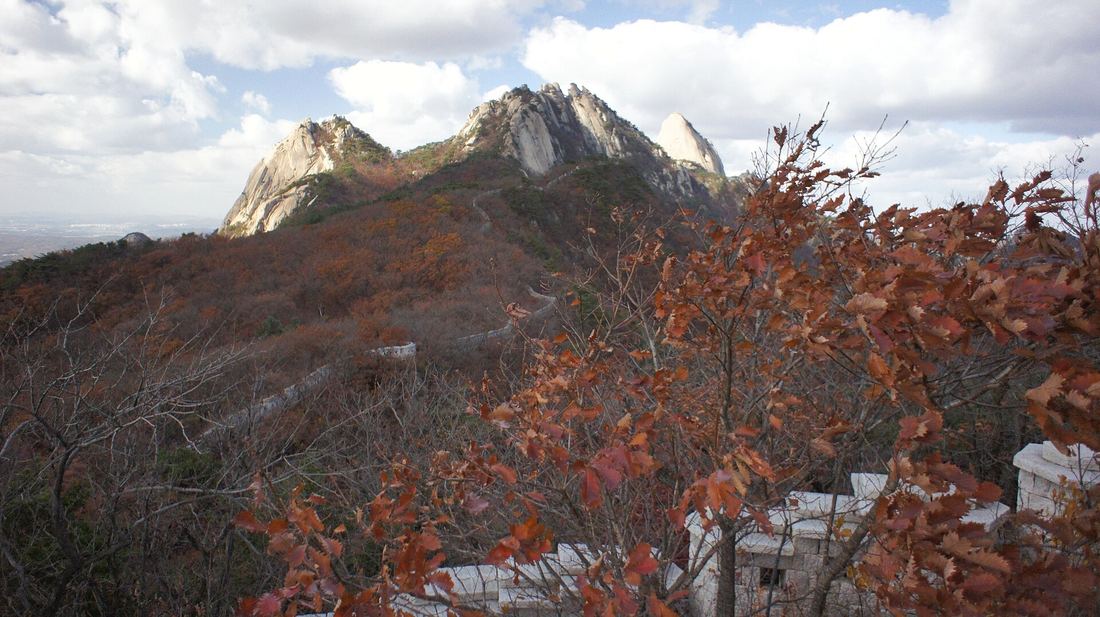
- Bukhansan National Park sits inside Seoul, and the Ui-Sinseol light rail ends at Bukhansan Ui Station, at the park's edge (Korea National Park Service, KNPS).
- The Seoul Tourism Organization runs a hiking centre about a five-minute walk from that station (5F, 52 Samyang-ro 173-gil, Gangbuk-gu; 9:00–18:00; phone 1533-2608). It is closed every Monday and on public holidays.
- The gear rental is for foreign tourists and Koreans visiting with them, and the centre's site sends bookings to Klook.
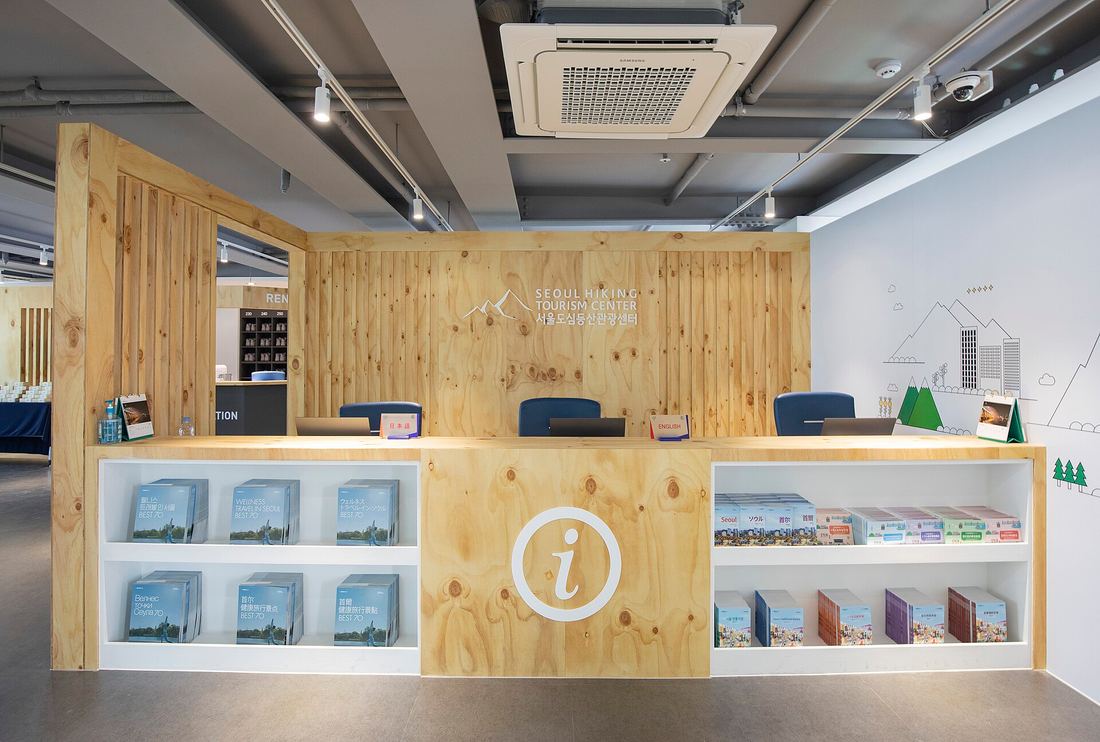
- It is not free. A May 2024 citizen-reporter article on Seoul city's Mediahub put rental at 2,000–5,000 won per item, and the centre's site does not list a current price, so check the booking page.
Facts read on September 28: seoulhiking.or.kr, KNPS reservation system, Seoul Tourism Organization press release of November 2024, Seoul city's Mediahub.
2What to Wear
- There is no dress code in the park law. KNPS's published list of banned acts in national parks does not mention clothing.
- But the Interior Ministry's beginner hiking guide says to wear hiking shoes, for grip. At Baegundae (836 m), Bukhansan's high point, the last stretch is bare rock where you climb holding steel ropes. A 2026 piece on Seoul city's Mediahub recommends shoes with good traction and non-slip gloves for it.
3The Gentler Route: Uiryeong-gil
- Uiryeong-gil links Ui-dong in Seoul with Yangju along a wide, mostly flat former military road, which Seoul's Mediahub described in 2024 as good for families. KNPS calls it the one Bukhansan Dulle-gil section that needs a reservation.
- KNPS's reservation page says that from April 2026 until further notice, weekends and public holidays are reservation-only and weekdays need no booking. Entry is 9:00–16:00, and reserved days are capped at 1,190 people. Bookings are online or by automated phone line (1670-9202). Seoul's Mediahub reported in 2024 that foreign visitors can reserve by phone and that you must carry ID.
- Check before a weekday autumn trip. In the 2024 pilot, September to November required reservations every day, and a 2026 news photo caption says the reservation system is kept for weekends and peak season.
4When Bukhansan Turns
- Average first colour is October 15. It came October 17 in 2023, October 23 in 2024 and October 22 in 2025, a week later than average.
- On September 28, KMA's Bukhansan page still showed only a before-colour photo, dated September 16.
Seoraksan: Three Ways In
1The Cable Car: Five Minutes, No Climbing
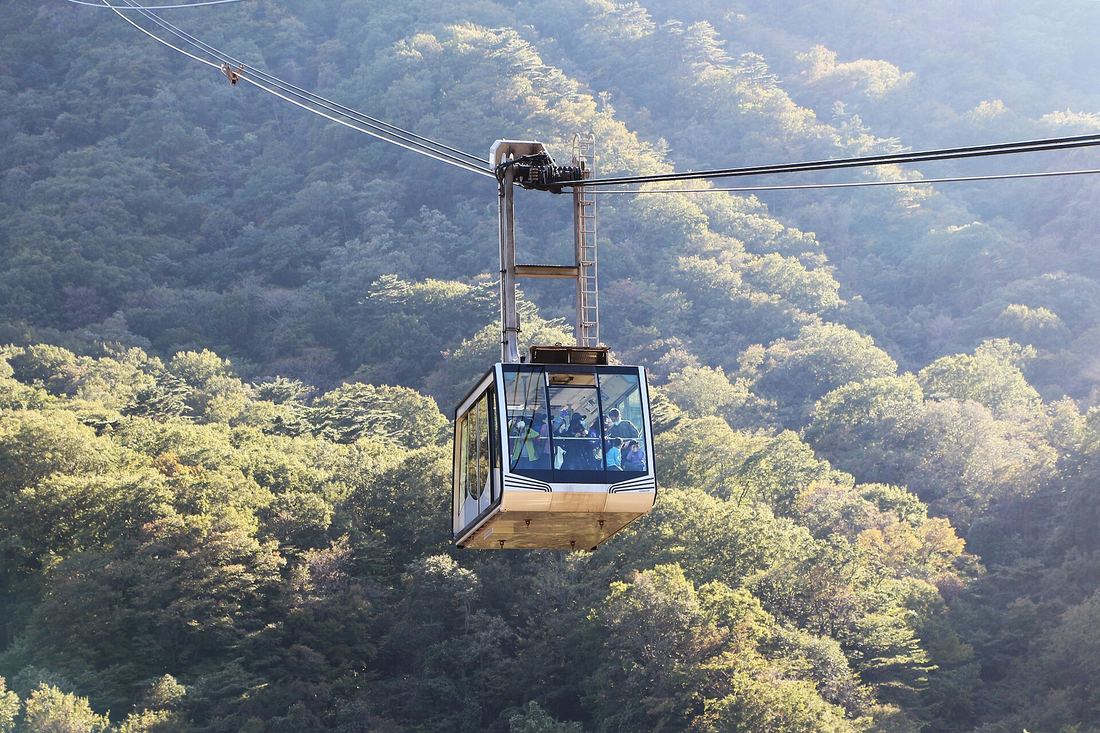
- The Seorak Cable Car climbs from the Seorak-dong entrance to Gwongeumseong, at about 699 m, in about five minutes each way.
- There are no advance bookings. Tickets are sold at the ticket office on the day, and the operator warns you may have to wait. Its site posts a live wait time and weather notice.
- Tickets are round trip only: 16,000 won for adults (middle school and up) and 12,000 for children (36 months to elementary school), and free under 36 months. On September 28–29 it ran 9:00–17:30, weather permitting.
- There is no walking trail down from Gwongeumseong, so you ride back. Time at the top is not limited, but be at the boarding area five minutes before the last descent. The cabin has no heating or air conditioning.
- It does not go to the summit. Daecheongbong is reached by the regular trails from Seorak-dong.
- Sokcho-bound buses run via the Seoul–Yangyang Expressway. The operator's directions give about 2 hours 30 minutes by express bus and 2 hours 10 minutes by intercity bus, with departures roughly every 30 minutes, then Sokcho city buses 7 or 7-1 from the intercity bus terminal to the terminus by the Seoraksan car park.
Facts read on September 28 from sorakcablecar.co.kr (fares, hours, FAQ and directions).
2Baekdamsa: The Back Way In
- From the Baekdam entrance in Yongdae-ri, Inje, a village bus covers about 7 km to Baekdamsa temple in 15–18 minutes. Inje County lists it at 7:00–19:00 for October 1–30, leaving every 30 minutes from the first ticket sale or as soon as the bus is full, at 2,500 won one way for adults 18 and over.
- On foot it is about two hours, per the county. KNPS lists the Baekdamsa route as 6.5 km, about 1½ hours, and rated easy.
- It is a way into Seoraksan that skips the cable car ticket office.
3The Ridge: A Day or Two
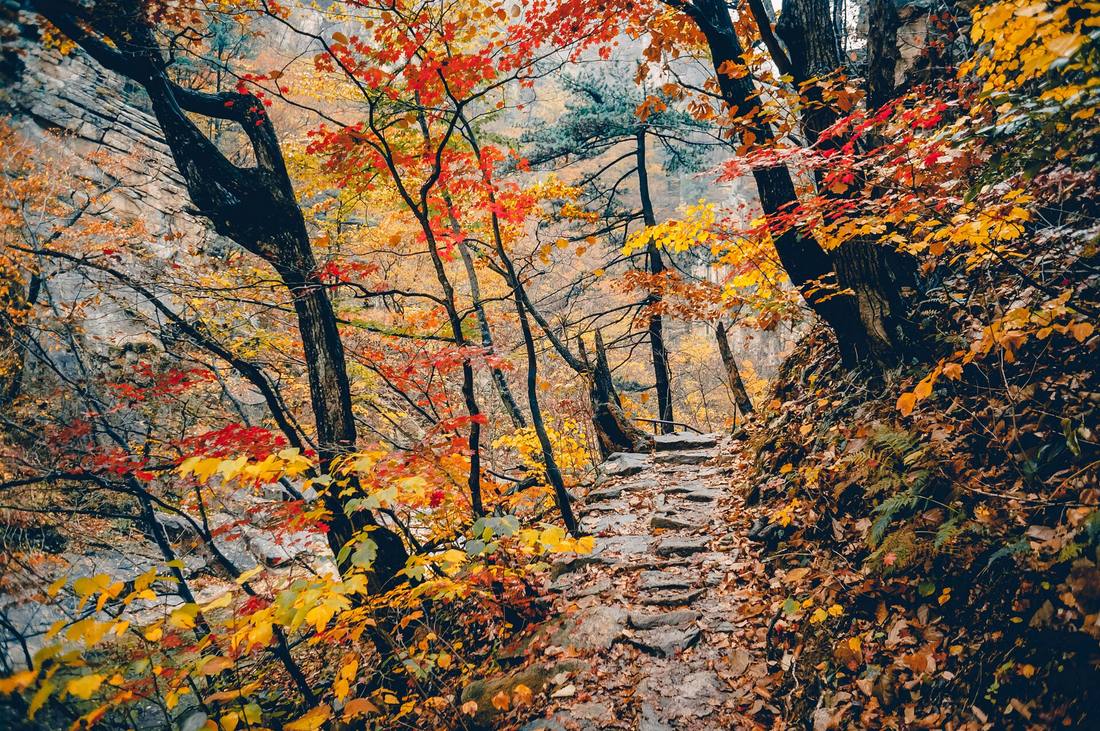
- KNPS lists the Osaek route up Daecheongbong at 5 km and about 4 hours, rated hard. The listing ends at the summit, so budget the way back too.
- The Hangyeryeong route along the northwest ridge to Daecheongbong and down to Seorak-dong is 19.3 km, about 12 hours, rated hard and listed as an overnight trip.
- From April to October, entry gates on both routes close at noon. In November they close at 11:00 from Osaek and 10:00 from Hangyeryeong.
- Shelter beds are allotted by lottery. KNPS's reservation page shows the round covering September 1 to October 31 was drawn on August 5, with leftover beds released first-come on August 7. For October you would be relying on leftover or cancelled beds.
- Dress for winter at the top. Last year's first snow fell near the summit on October 20, with a low of minus 1°C at the Jungcheong shelter.
What to Eat
You cannot cook on the mountain, so the meal is something you carry up or wait for at the bottom.
Carry It Up, Eat It Down
National parks ban cooking outside designated places, and drinking at shelters and other designated spots, under the Natural Parks Act (KNPS's published notice). So the summit lunch is something you carry: gimbap, and a thermos of hot water for instant noodles or tea. The hot meal waits at the trailhead.
Gangwon at the Table
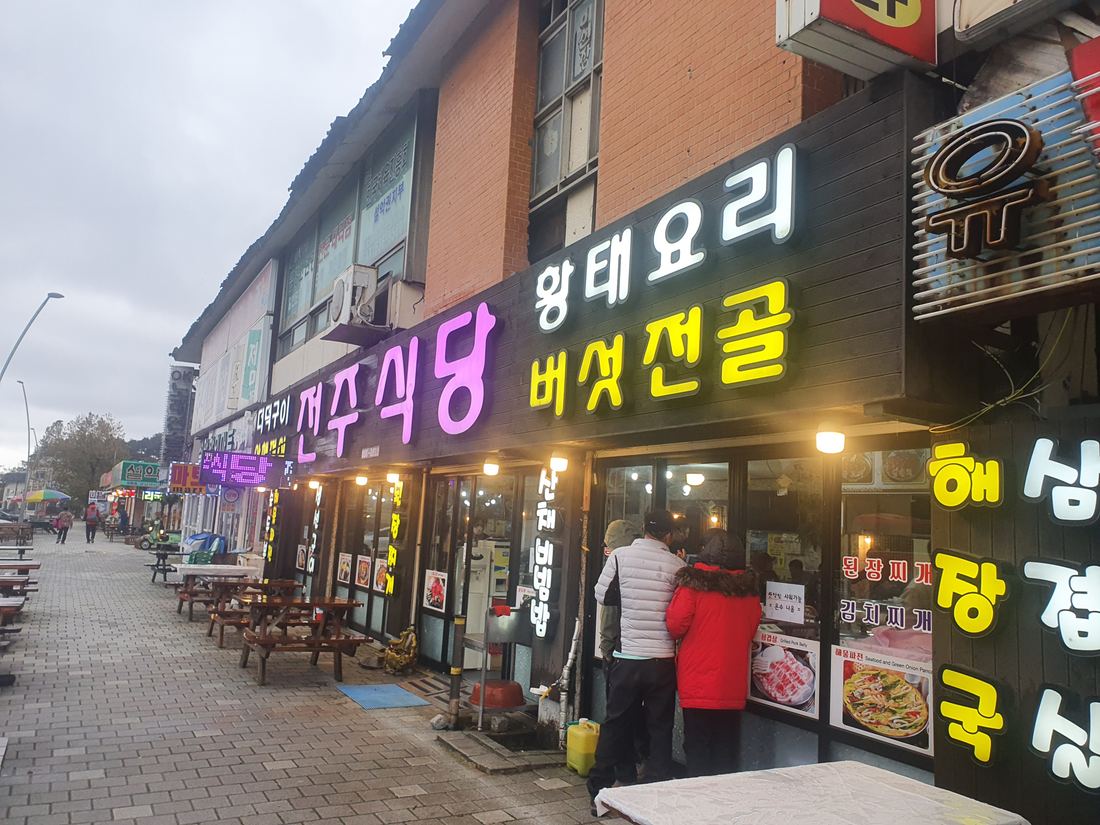
A Korea.net feature says Gangwon locals mainly cook with potatoes and buckwheat, with seafood added along the coast.
- Gamja ongsimi (감자옹심이): potato dumplings in soup. VisitKorea describes it as a Gangneung dish of grated potato mixed with starch and shaped into balls, known for its chewy texture.
- Makguksu (막국수): buckwheat noodles, which Korea.net describes as served with cold broth and sometimes sesame oil and vinegar.
- Ojingeo-sundae (오징어순대): squid stuffed with glass noodles, vegetables, tofu, perilla oil and chilli powder. The Korea Tourism Organization (KTO) puts it in the sundae alley of Sokcho Tourist and Fish Market at about 12,000–15,000 won a serving in May 2025, and says the dish grew out of refugees' longing for the blood sausage they ate in the North.
- Hwangtae haejangguk (황태해장국): the soup of winter-dried pollack. KTO says Inje's Hwangtae Village, around Yongdae-ri near the Baekdam entrance, produces about 70% of Korea's hwangtae and has a row of hwangtae restaurants.
Menus and prices vary by shop. The 2025 price is KTO's; confirm on the menu.
The Ginkgo Forest Somebody Kept Closed for 25 Years
Hongcheon's One-Month Forest
In 1985 a private farm owner settled in Naemyeon, Hongcheon, for his wife's health. Having heard of the nearby Sambong Yaksu mineral spring, he began planting ginkgo saplings one at a time in hope of her recovery. Hongcheon County says the forest stayed closed to visitors for 25 years. Since 2010 it has opened in October only, free of charge.
- Open during October, 10:00–17:00, free. The county page lists 686-4 Gwangwon-ri, Naemyeon, and the phone number 033-433-1259.
- About 2,000 ginkgo trees stand in rows five metres apart on roughly 40,000 square metres, and Kyunghyang reported over 100,000 visitors a year.
- Last year it ran October 3 to November 2. On September 28 the county page had not posted this year's dates, so call before you go.
- The Forest Service forecasts ginkgo trees nationwide to peak on October 30. The county itself says catching the peak is hard, and that the forest is worth a visit while the leaves are still green and after they have fallen.
- Village residents sell potato pancakes and acorn jelly near the forest, and Sambong Yaksu, designated Natural Monument No. 530, is nearby.
The forest is private land opened to the public for one month a year. Please treat it accordingly.
Before You Go
1Check the Pages Koreans Check
- KMA's Weather Nuri famous-mountain foliage page has the mountain-by-mountain colour photos (Korean only; menu: Themed Weather, Seasonal Observation, Famous Mountain Foliage). The Gangwon office also runs a foliage-and-weather service for the Seoraksan, Odaesan, Chiaksan and Taebaeksan trails.
- The Forest Service's peak forecast map was issued September 22.
2Dress for the Summit
- The Interior Ministry said in 2024 that October has had the most hiking accidents over the previous three years, and that slips and falls are the top cause at 34%.
- Its advice: pack a spare layer and gloves, start early, and be down one to two hours before sunset. Stay on designated trails.
3Book Early, Travel Light on Crowds
- Seoraksan drew 8,440 hikers on Saturday, September 19, and 7,550 on Sunday (as of 3:30 p.m.), before the colour had properly started, according to the park office. Kangwon Ilbo reported on September 21 that some pensions near Seoraksan were already mostly booked on weekends through the end of October.
- The park office asks visitors to the lower trails to take public transport rather than drive. The Interior Ministry says 4.04 million people visited national parks in October 2023, 1.7 times the monthly average.
4Know Who to Call
- The 1330 Korea Travel Helpline (+82-2-1330) answers in Korean, English, Japanese and Chinese. Seoraksan National Park Office: +82-33-801-0900.
⚠ Fares, opening hours, reservation rules, shuttle times and colour forecasts above are as read on September 28, 2026, and they can change with the weather and the season. Trails, gates and shelters can close for weather or safety reasons, and hiking carries a real risk of injury. This is general information, not safety advice, so check the National Park Service and the operators' own pages before you go, and follow park staff's directions on the day.
 Mori: Hwangtae soup after a cold descent. I know it has a hangover-soup reputation, but scalding broth and rice at the end of a chilly day works for me anyway. Do you go for the noodles or the soup?
Comments open soon.
Video credits
Music and sound effects: Han River Chill by u_98673jp944 (Pixabay Content License)
Photos used in the videos: Hyolee2 / Wikimedia Commons (CC BY-SA 4.0) · Jongsun Lee / Wikimedia Commons (CC BY 3.0) · SWT666 / Wikimedia Commons (CC BY-SA 4.0) · Sally Wilson / Wikimedia Commons (CC BY-SA 2.0) · Seoulite1982 / Wikimedia Commons (CC BY-SA 4.0) · Kgw1226 / Wikimedia Commons (CC BY-SA 4.0) · eimoberg / Wikimedia Commons (CC BY 2.0) · Junho Jung (Flickr) / Wikimedia Commons (CC BY-SA 3.0) · Seoulite1982 / Wikimedia Commons (CC BY-SA 4.0) · Kimhs5400(누리위키) / Wikimedia Commons (CC BY-SA 4.0) · Christophe95 / Wikimedia Commons (CC BY-SA 4.0) · Bernard Gagnon / Wikimedia Commons (CC0) · Café Bene / Wikimedia Commons (CC0) · jyleen21 / Wikimedia Commons (CC0 1.0) · Wikimedia Commons (author not named in the credits file) (CC0 1.0) · Wikimedia Commons (author not named in the credits file) (Public Domain) · bajo1 / Tistory 「금강산도식후경」 (CC BY 4.0) · 황남원 / 공유마당 (CC BY 4.0) · Korea Tourism Organization PhotoKorea (photographers: 강원지사 모먼트스튜디오, IR 스튜디오, 김종욱, 김지호, 니오타니 스튜디오, 두드림, 박성근, 박은경, 서문교, 안영관, 오경택, 이범수, 정규진, 정현석, 한건우, 홍정표) (KOGL Type 1) · Korea Tourism Organization (visitkorea.or.kr) · 인천광역시 남동구청 보도자료 「남동구, 은행나무 열매 진동 수확으로 악취 민원 적극해소」 (KOGL Type 1 (공공누리 제1유형)) · OpenStreetMap contributors (ODbL)
Full source and license details are on the Credits page.