Convenience Store Chuseok: Korea's Holiday Lunchbox Boom
CU, GS25, 7-Eleven, and Emart24 all sold Chuseok-themed lunchboxes built for one this year — and three years of sales data say Korea's solo-holiday shoppers are buying in.
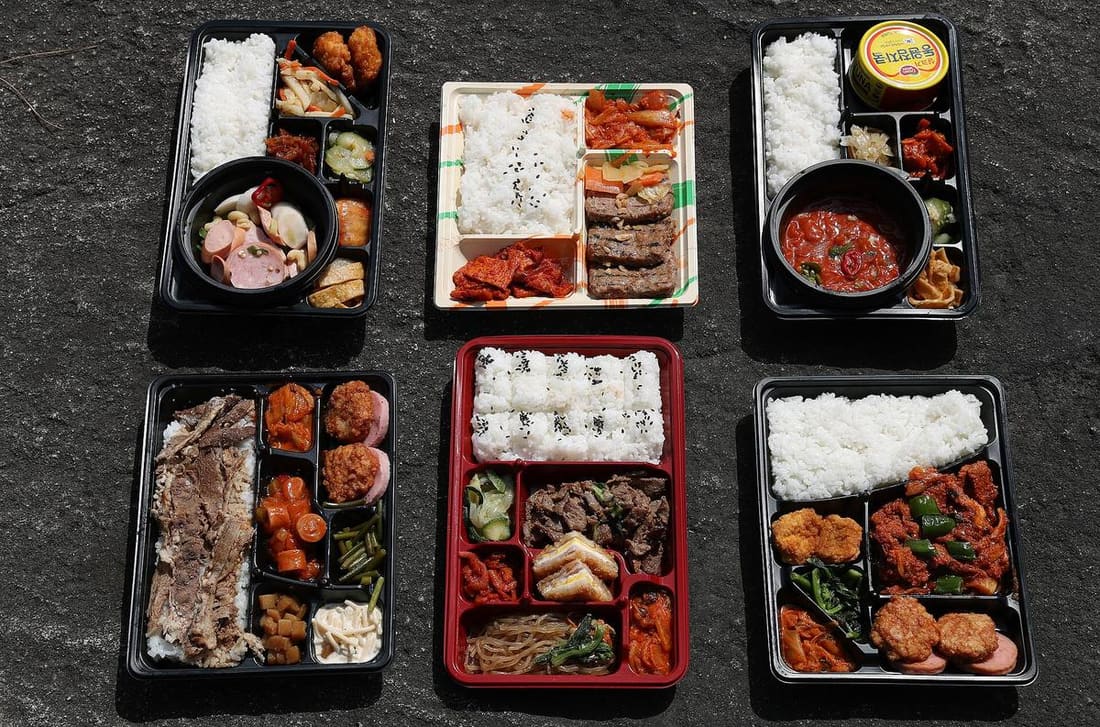
The Newest Chuseok Tradition Runs on a Refrigerated Case
Chuseok has always meant a full table — ancestral rites, a home-cooked spread, family arriving from everywhere. This year, Korea's four biggest convenience store chains bet that a growing number of people would rather skip the cooking part, and they've got three years of sales data to back that bet.
"Honchujok" is a marketing category now
CU's own sales figures show its holiday lunchbox sales climbing 18.5% in 2023, 20.8% in 2024, and 12.2% in 2025 compared to the year before — three straight years of double-digit growth around Chuseok and Lunar New Year. College neighborhoods, studio-apartment districts, and officetel zones — classic single-person addresses — accounted for 60.5% of that spending last year. By 7-Eleven's own reported figures, it saw a similar pattern: triangle-kimbap sales up 23% and lunchbox sales up 15% over last year's Chuseok period, year on year.
None of this is happening in a vacuum. Single-person households have been one of the fastest-growing groups in Korean statistics for two decades — from roughly one in six households in 2000 to well over three in ten by 2020, per Statistics Korea (the exact current figure varies a few points depending on how it's counted, but the direction isn't in dispute). Chuseok food marketing is visibly catching up to that shift instead of assuming everyone still cooks for a full table.
What Was Actually on the Shelves This Year
All four major chains rolled out Chuseok-specific products through September, timed to land before the holiday itself on September 25.
GS25
- 이달의 도시락 한가위편 (₩6,900, launched September 1) — black rice, Jeonju-style bibimbap, and namul rice, plus japchae, tteok-galbi, seasoned dak-galbi, dak-gangjeong, and a trio of jeon, divided into the chain's signature nine-section tray, with two songpyeon on the side.
- 추석 맥적구이 주먹밥 (₩1,900, September 22) — a cheaper rice ball built on gondre-namul rice, topped with maekjeok-gui (marinated grilled pork).
CU
- 풍성한가위 정찬 도시락 (₩6,500, September 15) — soy-braised bulgogi, japchae, jeon, and three seasoned namul (spinach, bracken fern, bellflower root), with kimchi on the side.
- 참깨송편 (₩3,500) — eight sesame-filled songpyeon, split evenly between plain white rice cake and mugwort rice cake, packaged single-serving size with a fork included.
7-Eleven and Emart24
- 복가득담은 line (September 15) — a lunchbox plus a tteok-galbi kimbap and a grilled-pork-skewer musubi, all built on what the chain calls its new "Rice Project" moisture-retention tech, which it says keeps the rice soft straight out of the fridge case without a microwave. The packaging leans hard on Chuseok visuals — roof tiles, a full moon, a persimmon tree.
- 한가위보름달만찬 (Emart24, September 16) — black rice and Korean pork bulgogi, discounted 30% at launch.
⚠ Products, prices and launch dates above are as reported for the 2026 Chuseok season. These were seasonal lines, and stock, prices and discounts varied by store, so don't expect to find them now. The lunchboxes in the photo at the top are an illustrative example of convenience-store bento, not necessarily the products listed here. Mori's Korea is not affiliated with or sponsored by any of these chains.
18.5% → 20.8% → 12.2%
CU's year-over-year growth in holiday lunchbox sales for 2023, 2024, and 2025 — three straight years of double-digit growth.
60.5%
Share of CU's holiday lunchbox sales last year that came from college areas, studio-apartment districts, and officetel zones.
+23% / +15%
7-Eleven's year-over-year growth in triangle-kimbap and lunchbox sales during last year's Chuseok period alone.
Why This Matters If You're Actually in Korea for Chuseok
Chuseok is one of the two days a year — along with Lunar New Year — when a real share of Korea shuts down. Small restaurants, traditional markets, and plenty of shops close for a few days so staff can travel home. Convenience stores are the usual exception: many of them stay open around the clock straight through the holiday (hours vary by store), which is part of why four national chains poured new products into that specific window instead of just keeping the instant-noodle shelf stocked. For visitors in Korea over September 24–25 wondering where to eat, this year's answer was a lot more interesting than another triangle kimbap.
Comments open soon.