Chodang Sundubu: Gangneung's Seawater Tofu, and the Man Who Didn't Actually Invent It
Gangneung's most famous tofu village names its dish after a 16th-century scholar credited with swapping standard brine for clean seawater — except Korea's own national encyclopedia calls that origin story undocumented, and cites a royal record from a century earlier already describing the same technique. Here's the more complicated real history, and the plain, unspicy way the village actually eats its own tofu — nothing like the fiery red stew most people picture when they hear 'sundubu.'
A Tofu Village Named After One Man's Pen Name
About 100 miles east of Seoul, on Gangneung's stretch of coastline, sits Chodang-dong — a quiet neighborhood built around a single food: soft tofu curdled with seawater instead of the usual coagulant. Roughly twenty restaurants cluster here today, most run by families who've been making tofu for generations, and nearly every account of how the village got its name and its method starts with the same one man.
The legend: a scholar's front yard, and a splash of seawater
Local tradition credits Heo Yeop (허엽, 1517–1580), a Joseon-dynasty scholar-official whose family home stood in what's now Chodang-dong, with the method. The story goes that he mixed the naturally sweet spring water from his own yard with clean seawater from the coast nearby, instead of the coagulant tofu-makers normally used, and the tofu that came out of it tasted good enough that people started calling it after his pen name — Chodang (草堂), which means something close to "thatched cottage." He also held a real government post nearby, as magistrate of Samcheok starting in 1563, before being removed from it over remarks considered too outspoken for the job.
What the record books actually say
Korea's own national academic reference, the Encyclopedia of Korean Culture, states the Heo Yeop story plainly: it's a transmitted legend, and no documentary evidence supports it. The same entry goes further and cites something that undercuts the story on its own terms — the Veritable Records of King Munjong, an official state record, already describes tofu being coagulated with seawater or dissolved salt water in 1451, the first year of Munjong's reign. That's roughly a century before Heo Yeop would have been alive to mix anything in his own yard. Whatever he actually did in Gangneung — and there's no reason to assume he did nothing — using seawater to curdle tofu wasn't something he came up with first.
Even the shape of the legend isn't fully settled: one widely read English write-up on the same village describes the method as the work of an unnamed "member of the royal household," with no mention of Heo Yeop at all. Korean-language sources consistently name him; this one doesn't. Both can't be the one precise, sourced version of events — which is itself a small demonstration of how loosely this specific origin story has always traveled.
Seawater Instead of Brine, and a Family Known for Something Else Entirely
Whoever actually gets credit for it, the technique itself is real, still in daily use, and it's the one thing that actually separates this tofu from tofu made anywhere else in Korea.
Why seawater works as a substitute at all
Standard tofu-making curdles hot soy milk with ganjeu — traditionally a magnesium-chloride-heavy brine, today often a manufactured coagulant like nigari or food-grade gypsum. Chodang tofu skips that and uses filtered local seawater instead, drawn from the East Sea and left to settle before use. Gangneung's stretch of the East Sea reportedly carries enough natural magnesium and calcium on its own to curdle soy milk without needing to be boiled down or concentrated first, which is the specific reason this coastal shortcut works here rather than just being a regional gimmick. The rest of the process runs close to standard tofu-making: soybeans soaked roughly six to twelve hours, ground and extracted as soy milk, boiled for about two hours, then curdled with seawater and pressed into shape.
A household better known today for two of its other children
Heo Yeop's own household turned out to matter more to Korean literary history than to Korean food history. Two of his children are far more widely known than he is: his son Heo Gyun, credited with writing Hong Gildong-jeon, generally treated as Korea's first novel written in Hangul rather than classical Chinese, and his daughter Heo Nanseolheon, one of the most celebrated woman poets of the entire Joseon dynasty. A memorial hall for the two of them sits close enough to the tofu village that local day-trip itineraries list the two stops back to back — the same neighborhood that gave tofu a scholar's pen name also happens to be where two of Korea's more significant literary figures were raised.
The Dish on the Table Isn't the One Most People Picture
For a lot of people outside Korea, "sundubu" means one specific thing: a fiery red stew. Order the default dish in the village that actually gave the tofu its name, and you'll get the opposite.
Sundubu-baekban: tofu with nothing added, on purpose
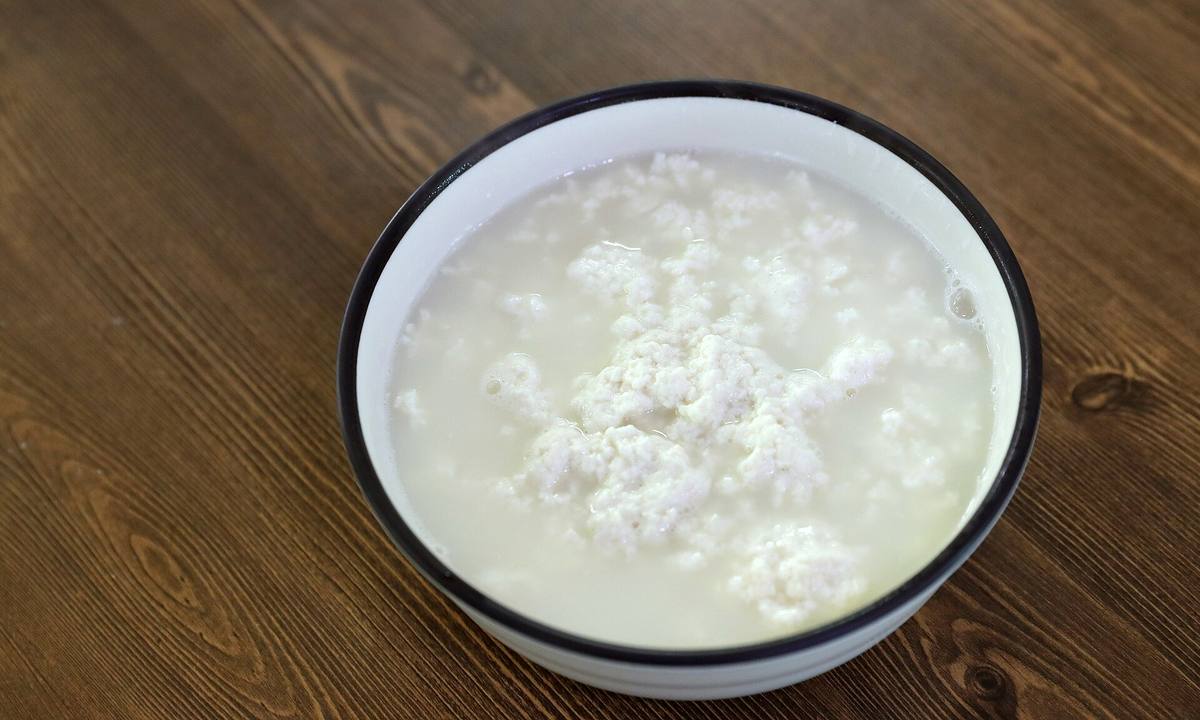
The standard order in Chodang-dong is sundubu-baekban — plain, unseasoned white soft tofu, still warm in its own thin liquid, served as a full meal with rice, side dishes, and a small bowl of soy-based dipping sauce alongside it. There's no gochugaru in it at all by default. The point of the dish is the tofu itself: the specific texture and mild, faintly briny flavor the seawater-curdling method produces, with no spicy broth covering it up. Restaurants in the village do serve a red, spicy version too — some make their own local variant using jjaebok, a small East Sea clam — but it sits on the menu as an option, not as the headline.
The stew most people know has a completely different, and completely traceable, history
The fiery version most people picture didn't become internationally famous through this village at all. Monica Lee opened Beverly Soon Tofu in Los Angeles's Koreatown in 1986 — reportedly the first restaurant in the US built specifically around sundubu-jjigae — and in 1996, Hee Sook Lee opened BCD Tofu House a few blocks over, growing it into a chain with locations across the US. Both built their reputations in Los Angeles, not Gangneung; Hee Sook Lee, for the record, was born in Seoul. From there the dish went further still: the Americanized, extra-spicy Koreatown style eventually got carried back into Korea itself, riding its own popularity abroad. Two real, well-documented sundubu stories — one running through a scholar's front yard in Gangneung, the other through 1980s-90s Los Angeles — just happen to share an ingredient and a name.
A Neighborhood That Turned Into Restaurants One Family at a Time
Chodang-dong wasn't built as a tourist destination — people have lived in the area for over a thousand years. The shift toward tofu tourism specifically is much more recent and reasonably well dated: starting in 1979, families who'd already been making and selling tofu for three or four generations began opening it up as restaurants, one by one, around the pine grove that still shades part of the neighborhood. A modernized tofu factory followed in 1983, and outside visitor traffic picked up through the 1990s as the village's reputation spread beyond Gangneung itself. Today the neighborhood sits a few minutes from two of Gangneung's other headline draws — Gyeongpo Lake to the north and Anmok Beach's coffee street to the south — close enough that most visitors stack all three into one day.
Comments open soon.