Tteokbokki at Home, the Way Koreans Actually Make It
No fish cake? No problem. Here's the version that actually shows up at family dinners — and what the sauce is really made of.
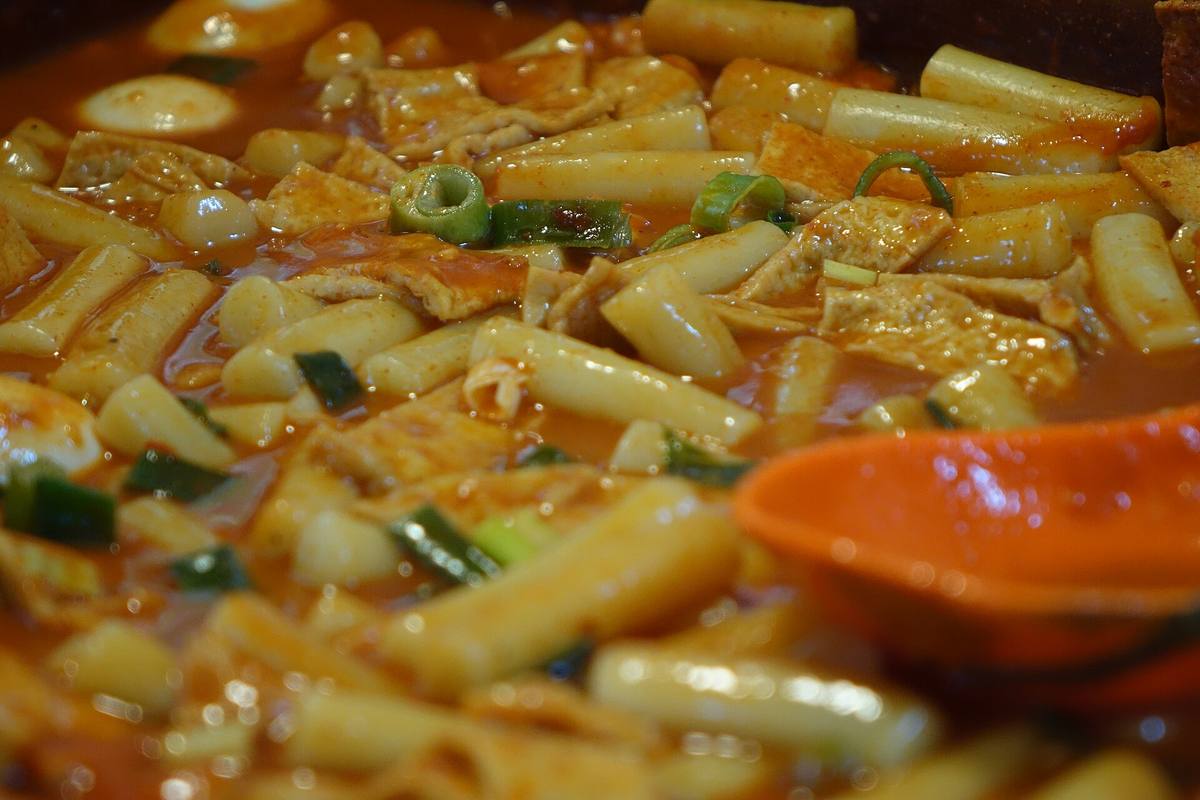
Why Tteokbokki Tastes Like That
The sauce is the whole dish — everything else is just along for the ride.
The sauce: gochujang + gochugaru, not just one or the other
Most home cooks reach for only gochujang (fermented red pepper paste) and wonder why it tastes flat compared to street stalls. The real move is gochujang for body and savoriness, plus gochugaru (red pepper flakes) for sharper heat — using both is what gives street tteokbokki its layered spice instead of a one-note sweet-hot flavor.
- Gochujang (Korean red pepper paste)
- Gochugaru (Korean red pepper flakes)
- Sugar and a little corn syrup (for the glossy, sticky finish)
- Soy sauce, minced garlic
Exact ratios vary stall to stall — start light on gochugaru and add more, it's easier to fix bland than to fix too spicy.
The stock: dried anchovy and kelp, not water
The other thing home versions skip is simmering the rice cakes in dried anchovy and kelp (dashima) stock instead of plain water. It's a background flavor you won't consciously notice — you'll just notice its absence if you skip it.
- Eomuk (fish cake) — the classic add-in, sliced into triangles
- Boiled eggs — common at stalls, optional at home
- Scallion, cut into short lengths, added near the end
No fish cake in the fridge? Genuinely fine — the sauce and stock are doing most of the work anyway.
Method, roughly
- Simmer dried anchovy and kelp in water 10-15 minutes, then remove them — this is your stock.
- Stir the gochujang, gochugaru, sugar, soy sauce, and garlic into the stock.
- Add rice cakes and fish cake, simmer until the rice cakes turn soft and the sauce thickens and clings to them.
- Add scallions in the last minute, off heat.
⚠ Allergen note: the anchovy stock and fish cake contain fish, and gochujang, soy sauce and fish cake typically contain soy and/or wheat. If you or a guest has an allergy, check the label on every ingredient.
Comments open soon.