Andong's International Mask Dance Festival Runs Through October 4 — 24 Countries Are Showing Up
Korea's own UNESCO-listed mask dance tradition is hosting 28 performance teams from 24 countries in a small Gyeongbuk city through October 4. Here's what's happening, and how to plan around it.
What's Happening
Andong International Mask Dance Festival 2026
Eleven days, one small city in Gyeongbuk province, and mask performers arriving from every continent — the festival opened September 24 and runs through October 4 under the theme "The Memory of Masks, Everyone's Dance." It's centered on Jungang Line 1942, a retired train station rebuilt as a festival venue, along with Mask Dance Park, Hahoe Village, and Andong's original downtown.
- Runs September 24 – October 4, 2026 (11 days)
- 28 international performance teams from 24 countries confirmed
- Presale tickets (6,000 won general / 4,000 won student) closed September 17; gate prices run 2,000 won higher (8,000 / 6,000 won)
- Ticket holders get a 2,000-won "mask dance love coupon" usable around the festival grounds and downtown
- Newly designated a Ministry of Culture, Sports and Tourism "Global Festival," backed with 2.4 billion won in funding over three years
Why Talchum Is a Big Deal
The centerpiece isn't a modern production built for tourists — it's talchum, a centuries-old form of masked dance-drama, and it's not just locally famous anymore.
A UNESCO-Recognized Tradition
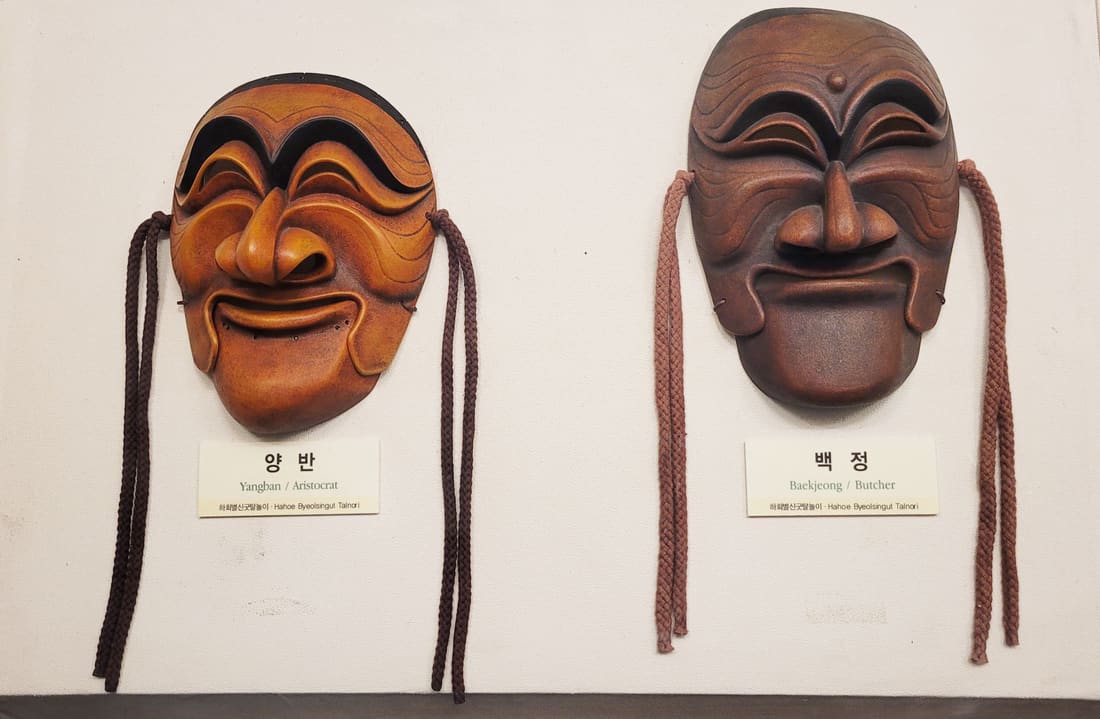
In November 2022, UNESCO inscribed "Talchum, mask dance drama in the Republic of Korea" on its Representative List of the Intangible Cultural Heritage of Humanity — Korea's 22nd element on that list. The performances pair six to ten live musicians with masked dancers acting out sharp, often comic social commentary. Local folklore traces the tradition to Hahoe Village, where the mask let ordinary performers mock monks, scholars, and the yangban aristocracy without ever breaking character — or facing the consequences they would have bare-faced.
No Stage Required
Traditionally, talchum doesn't need a formal stage — any open space works, and the audience isn't just watching. Cheers and jeers from the crowd are part of how the performance actually plays out, which is a large part of why it survived as a living practice instead of freezing into a museum piece. Hahoe Village itself, where the tradition originates, is a UNESCO World Heritage village in its own right — a separate designation from talchum's own listing, and one of this year's festival venues rather than a side trip.
Not Just Korean Masks
The "international" in the festival's name is doing real work — this isn't a Korean festival with one token overseas guest slot.
24 countries
Represented on stage, performing their own national mask traditions alongside Korea's. Past lineups have included Indonesian Topeng, Japanese Noh, Bhutanese Cham, and Italian commedia dell'arte.
28 teams
International performance groups confirmed for 2026 — on top of the Korean talchum troupes performing the festival's home tradition.
1997
The year the festival itself began — decades after the masks and the dance tradition it's built on, which trace back much further.
If You're Going
1Mind the Two Andong Stations
- KTX and other trains put you at the current Andong Station — not the festival venue. The venue is Jungang Line 1942, the city's retired original station, now repurposed as a cultural space. From the current station it's a short bus or taxi ride; when you search directions or tell a driver where you're going, say "Jungang Line 1942 Andong Station" or "old Andong Station" specifically, since both stations show up under the plain "Andong Station" name on maps.
2Pair It With Hahoe Village
- Hahoe Village — the UNESCO World Heritage village where the mask tradition originates — is a festival venue this year, not a separate detour. Performances and mask-related programming run there throughout the festival window, on top of the folk village itself.
3Budget for Gate Prices
- Presale closed September 17, so tickets now cost the gate price — 2,000 won more than presale (8,000 won general, 6,000 won student).
⚠ Dates, ticket prices, venues and programs above follow the festival's published information and Korean press coverage as of late September 2026. They can change, so confirm on the festival's official site before you go. Mori's Korea is an independent guide and is not affiliated with the festival or its organizers.
Mark Your Calendar
Andong has run this festival every year since 1997, usually landing in this same late-September-to-early-October window, though exact dates shift year to year. If Gyeongbuk is anywhere near your Korea itinerary this autumn, an 11-day stretch with mask traditions from two dozen countries, staged inside a UNESCO World Heritage village, is a hard combination to find twice.
Comments open soon.