Jinju's Lantern Festival, October 3–18 — 16 Nights on a Battlefield River
Korea's biggest water-lantern festival floats 16 nights of lanterns on the river where they were first used as a battlefield signal in 1592. Free to walk into, newly funded as one of three national 'Global Festivals' — here's the official 2026 program, the prices, and how to get there.
What's Happening
2026 Jinju Namgang Yudeung Festival
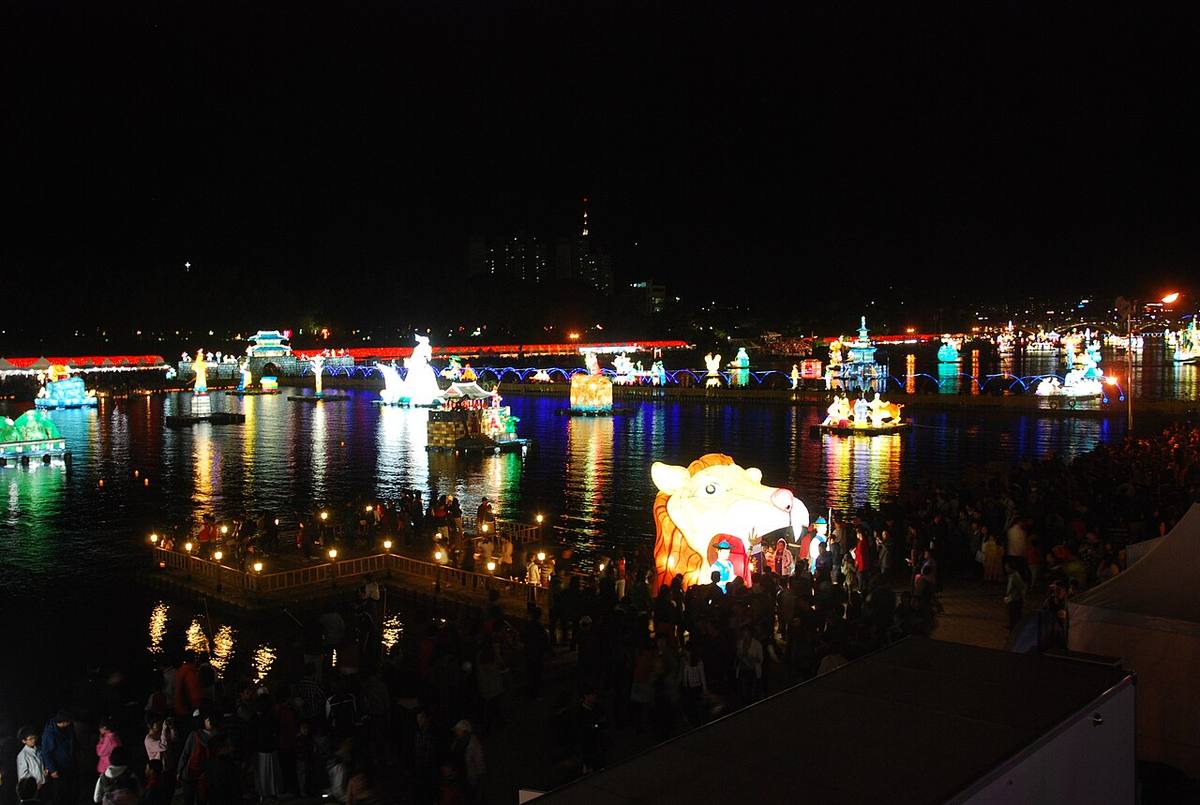
Sixteen nights, one river, and a fortress wall lit from the water — the festival runs October 3 through October 18, staged around Jinjuseong Fortress and the Namgang River in the center of Jinju, a city in South Gyeongsang province. The organizers' theme this year is "역사의 강, 평화를 담다," which their English homepage renders as "The River of History, Holds Peace," under the tagline "You and Me, All of Us, We Are The World."
- Runs October 3–18, 2026 (16 nights)
- Free to enter — the festival dropped admission in 2018, and the Korea Tourism Organization lists the 2026 price as free
- Lanterns are lit 18:00–24:00; the pontoon bridges and booths run earlier and close earlier, 13:00–23:00
- Opening night, October 3: a memorial rite for the 1592–93 dead at Jinjuseong at 18:00, a parade of district lanterns at 18:30, and the first lighting of every lantern at 19:30
- Night shows: drone light shows on October 3, 10 and 17 (19:50 on the 3rd and 17th, 20:00 on the 10th), and fireworks over the river on October 3, 9 and 17 at 20:00
- Hands-on programs: hanging a wish lantern, floating your own lantern, and crossing the pontoon bridges — several of them paid (prices below)
- Two more festivals overlap in the same city from October 9–18 — the 75th Gaecheon Arts Festival and the Korea Drama Festival
The Lanterns Started as a Military Tactic
This isn't a harvest festival or a temple tradition that drifted onto the water. The festival's own official history is specific about where the lanterns came from, and it isn't gentle.
A Signal Line Across the River
In the tenth lunar month of 1592 (early November on the Gregorian calendar), during Japan's invasion of Korea, roughly 3,800 defenders under Jinju magistrate Kim Si-min held the fortress against an invading force the official account puts at around 20,000. The festival's own history page says that first siege dragged on for ten days; other accounts date the fighting to six days, October 5–10 by the lunar calendar. On the darkest nights of it, the defenders floated lanterns out onto the Namgang — partly as a military tactic, to make the river impossible to cross unseen, and partly as a communication line, to get word to families outside the walls. The festival's own origin page still describes those two functions in exactly that order, which is a blunter founding story than most festivals put on their front page.
Then It Became a Memorial
The following summer, in the sixth lunar month of 1593 (July on the Gregorian calendar), the second battle at the same fortress went the other way. The festival's official account records 70,000 civilians, officials and soldiers dying in that defense; some other accounts put the toll nearer 60,000. Afterward, the people of Jinju floated lanterns on the river again — this time to console the dead — and that is the thread the modern festival draws directly to itself. Worth knowing before you go: the thing being commemorated on the water is a siege and its aftermath, not a good harvest.
The Part Older Guides Get Wrong
If you find a travel post quoting an entrance fee for this festival, check its date — the admission policy flipped twice in four years, and the current answer is free.
Paid for Three Years, Then Free Again
In 2015 the festival went fully ticketed, and by its own chronology that worked exactly as intended on paper: the self-funding ratio jumped from around 40 percent to 80 percent, which the festival records as making it the first Korean festival to reach that nationally top-tier level of self-funding. The second paid year, 2016, pushed it to 85 percent, with weekday free entry added for Jinju residents. Then the 2018 entry in the same official chronology opens by recording the change from paid to free admission — and free is how it has run since. That same 2018 edition is also where the drone show first appears as the festival's main event, which is why the drone programming feels newer than the lanterns it flies over.
2000
The year the modern festival began, held that October as the Jinju Namgang International Lantern Festival with artists invited from three countries. The lantern tradition behind it is centuries older; the festival itself is younger than it looks.
2.4 billion won
The most the state will give across 2026–2028 (up to 800 million won a year) after the Ministry of Culture, Sports and Tourism named it one of three "Global Festivals" this year — alongside Boryeong's mud festival and Andong's mask dance festival, which runs through October 4, the day after Jinju opens.
38,562
Wish lanterns counted in 2019, the last edition before the pandemic — up from roughly 5,000 in 2002. The festival's official chronology lists the count for each edition it ran between 2001 and 2019.
If You're Going
1Arrive Before the Lanterns Come On
- The two clocks here are different. Booths and the pontoon bridges run 13:00–23:00; the lanterns themselves are lit 18:00–24:00. Getting there in daylight means you see the fortress and the river layout first, then watch the whole thing change at dusk — and the lanterns stay lit an hour after the bridges shut, so the last hour is a bank-side view only.
2Free Entry Doesn't Mean Everything Is Free
- Walking into the festival grounds costs nothing, but the hands-on programs are priced separately. From the organizers' program page: crossing the pontoon bridges costs ₩2,000 one way or ₩6,000 for an all-day pass, hanging a wish lantern is ₩10,000, and making a hanji-paper lantern or a wearable LED headband is ₩15,000 each. Making a lantern and floating it on the river is listed at ₩5,000 in the Korean version of the page and ₩3,000 in the English version, so confirm the price on site — floating only opens from 18:00. Free options include a citizen lantern-making booth at the music fountain and, at Jinju Daecheop History Park, an AI-reactive lantern and an AI K-pop dance game.
3Pick Your Night: The Show Nights Are the Crowded Ones
- From October 9 to 18, the lantern festival overlaps with the 75th Gaecheon Arts Festival and the Korea Drama Festival in the same city. The organizers' schedule has six night shows — drone light shows on October 3, 10 and 17 and fireworks on October 3, 9 and 17 — and the city said in a July briefing that this year's drone shows will use more than 950 drones, its largest yet. Expect the biggest crowds on those nights and on weekends, and note that October 3 (National Foundation Day) and October 9 (Hangeul Day) are public holidays, and Monday October 5 is the substitute holiday for October 3, so the opening stretch is a long weekend. If you want the lanterns with fewer people around them, the in-between weekdays such as October 6–8 and 12–15 are the safer bet.
4Getting There: Free Shuttles, and the Official Site in English
- The organizers run free shuttle buses from temporary parking lots near the highway exits, the innovation-city district, and Jinju Station to drop-off points near the grounds. They run from 16:00 to 23:00, but only on October 3–5, 9–11 and 16–18. On other days, look for city buses marked as festival buses (the sign reads "축제장 가는 버스," "bus to the festival"). The transport page on the official site lists each lot and its capacity.
- The festival site runs in English, Japanese and Chinese as well as Korean; add ?lang=en to the address or use the language menu. The English pages are only partly translated so far — the overview page still shows its theme and venue in Korean — so keep a translation app handy. The organizing foundation lists 055-761-9111 for inquiries, and the city has said the new national funding goes partly toward a multilingual platform and expanded programs aimed at foreign visitors.
Mark Your Calendar
The one thing not to assume about this festival is that it lands on the same dates every year. Recent editions ran October 10–31 in 2022, October 8–22 in 2023, October 5–20 in 2024, and October 4–19 in 2025 — and the festival has been interrupted outright more than once, cancelled in 2009 during the flu outbreak, cancelled again in 2020, and pushed to December in 2021. This year's window is October 3–18. If autumn in Korea is on your calendar at all, a river full of lit lanterns under a fortress wall is the kind of thing worth building two nights around rather than catching on the way past.
⚠ The program, prices and shuttle times above follow the festival's official pages and Korean press coverage as checked on September 28, 2026. They can change, so confirm on the festival's official site before you go, and expect heavy crowds on the show nights and weekends.
Comments open soon.