The Pharmacy Is Becoming Seoul's Newest Must-Shop Stop — Right After Olive Young and Daiso
Foreign tourists' card spending at Korean pharmacies in May 2026 was 206% above a year earlier — the fastest growth of any sub-category, ahead of duty-free and department stores. Here's what's actually behind the counter, and why talking to the pharmacist is the whole point.
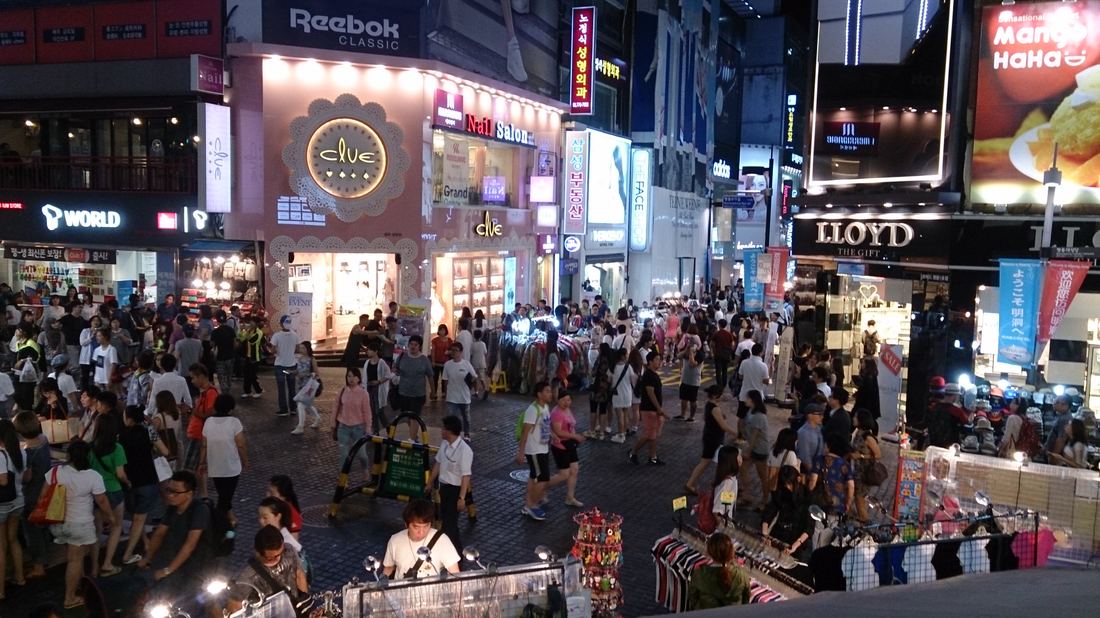
Olive Young's Newest Flagship Shot Up the Sales Charts — Then Something Else Happened
When Olive Young opened its "Central Myeongdong Town" flagship on March 26, 2026, it ranked second in both total and foreign-customer sales among the chain's major stores within a month, behind only the older Myeongdong Town store — and three of Olive Young's five highest-grossing stores nationwide were in Myeongdong (Asia Economy, May 2026). That's a local retail story on its own. The more interesting number showed up next door: at the other Olive Young branches in Myeongdong, foreign-customer sales rose 11.5% and dermocosmetic-category sales rose 24.3% from the month before, according to Olive Young. The same on-the-ground reporting describes tourists who hit Olive Young first and then work their way through the pharmacies nearby.
1The Shopping Circuit Just Got a Third Stop
- Korean business media already had a name for the standard tourist shopping loop — "Ol-Da-Moo," short for Olive Young, Daiso, and Musinsa. The version making headlines now adds a pharmacy: "Ol-Da-Yak," ending at yakguk.
- Dermocosmetics-focused pharmacies aimed squarely at tourists have opened one after another in Gangnam, Hongdae, Seongsu, and Myeong-dong — some posting Chinese- and Japanese-language signage.
- Travel platform Creatrip added a dedicated pharmacy category, partnering with pharmacies across Seoul and Busan that offer in-store consultations with a licensed pharmacist in English, Chinese, and Japanese.
"Pharmacies have become more popular recently following the surge of social media content featuring shopping vlogs and must-buy item recommendations," Creatrip CEO Yim Hae-min told The Korea Times in October 2025 — and the numbers below suggest the trend has kept climbing since.
2Why a Pharmacy, Specifically
- Korean business press often contrasts overseas drugstores, which it describes as sales-focused, with a Korean yakguk, where a licensed pharmacist on site can ask about skin condition, lifestyle, and allergies before recommending a product.
- The products driving the trend are pharmacy staples rather than the usual Olive Young haul: high-dose vitamins, acne-scar treatments, pigmentation creams, and after-procedure recovery products. Many tourist-oriented pharmacies now lay them out on open shelves with shopping baskets, Olive Young-style, and some offer instant tax refunds at the register.
- It's a viral loop as much as a medical one — Seoul Economic Daily attributes the boom to pharmacy products going viral on TikTok and Xiaohongshu as "must-buy" travel shopping items, which then sends tourists to pharmacies in the busiest tourist districts.
The Numbers, and Why to Read Them Carefully
Korea Tourism Organization card data, a bank's research institute, and individual card issuers are all tracking the same shift — just not always with the same number. Read as a body of evidence instead of one clean stat, the direction is hard to miss.
+206.1%
Year-over-year growth in foreign card spending at Korean pharmacies in May 2026 (versus May 2025) — the fastest-growing sub-category in the data, ahead of toys and entertainment goods (+191.4%), skin care and massage (+153.9%), department stores (+89.2%), and duty-free (+87.6%) (Korea Tourism Organization Data Lab, released June 2026).
₩141.4B
Foreign visitors' spending at Korean pharmacies in 2025, up 142.2% from the year before (Hana Institute of Finance report, February 2026).
59%
Share of foreign "medical" card transactions that went to pharmacies in the first half of 2025 — the single largest slice by count, ahead of dermatology clinics at 22% (Korea Tourism Data Lab figures, as reported by The Korea Times, October 2025). By value the picture flips: in July 2026, dermatology clinics took 54.9% of foreign visitors' medical spending and pharmacies 12.7% (Seoul Economic Daily).
+156%
Growth in pharmacy payments on the Wowpass foreign-visitor payment platform during the overlapping Japan Golden Week and Greater China May Day holidays in 2026 — the third straight year of triple-digit growth, with an average payment of about ₩47,000 (Seoul Economic Daily, May 2026).
One Card Issuer, One Wild Number
Not every source agrees on the scale. BC Card, one of Korea's largest card issuers, logged foreign pharmacy spending up 1,176.9% year-over-year in the first half of 2026 alone — far above every other figure here — it's one issuer's customers, and the source doesn't say what explains the gap, so a small starting base is a plausible reason. Treat that exact multiplier skeptically. Treat the fact that every card issuer and research institute asked is reporting some version of a triple-digit jump as the real signal.
⚠ These figures come from at least four separate sources (Korea Tourism Organization, Hana Institute of Finance, Seoul Economic Daily citing payment-platform data, and BC Card) covering overlapping but not identical time windows — a single month, a holiday week, a half-year, a full year. None of them is "the" official number for the trend; together, they're the evidence that it's real.
3If You Want to Try It
- Look for a pharmacy in Myeongdong, Gangnam, Hongdae, or Seongsu — the neighborhoods where tourist-oriented, multilingual pharmacies have actually opened, rather than any random yakguk sign.
- Talk to the pharmacist. That short consultation is the main reason to go to a pharmacy instead of just grabbing something off an Olive Young shelf — come with an actual skin concern, not just a wishlist copied from a video.
- Some Seoul and Busan pharmacies now offer English, Chinese, or Japanese-speaking consultations; Creatrip's pharmacy listings are one way to find one before landing rather than searching on the sidewalk.
This is shopping information, not medical advice. Tell the pharmacist about any allergies and any medication you already take, and check your home country's customs rules before bringing medicines or supplements back. Not every pharmacy offers tax refunds, and eligibility rules apply, so ask at the register.
Comments open soon.