10-Step Korean Skincare, Without the Overwhelm
What actually matters in a Korean routine, and what you can skip without guilt.
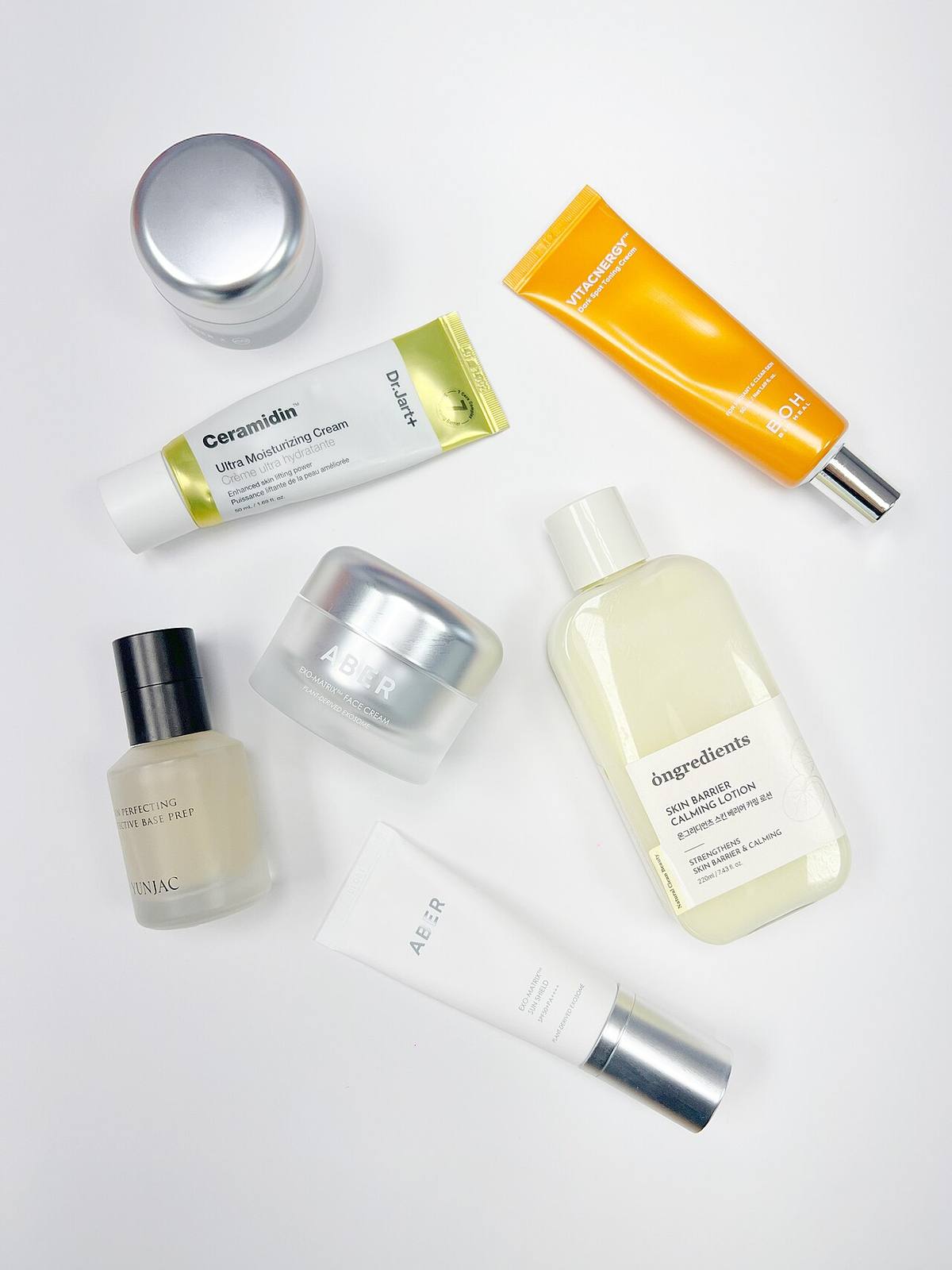
The 10 Steps — What's Core and What's Optional
The "10 steps" everyone quotes isn't 10 things you must do daily. Three are non-negotiable; the rest are add-ons you layer in as you go.
Oil cleanser core (PM)
Dissolves sunscreen, makeup, and sebum — oil breaks down oil. Massage in 30-60 seconds, add water to emulsify, rinse.
Water-based cleanser core
Finishes the clean — lifts sweat and any residue the oil cleanser left. This one's your only AM step.
Exfoliator 2-3x/week
Chemical exfoliants (AHA is the usual suggestion for dry skin, BHA for oily or breakout-prone skin) over physical scrubs. Not a daily step.
Toner core
Rebalances pH and adds the first layer of hydration. Korean toners tend to be watery rather than astringent, so they're usually gentle — though any product can sting on sensitive skin.
Essence optional
Lightweight hydration layer, often fermentation-derived. Nice to have, skip it early on.
Serum the one to actually pick
Where you target your main concern: vitamin C is commonly used for brightening, niacinamide for oil and the look of pores, hyaluronic acid for hydration. Pick one, not all three at once.
Sheet mask 1-3x/week
A concentrated, occlusive hit of whatever's in it. Fun, not essential.
Eye cream optional
Targeted, not required — add later if you want it.
Moisturizer core
Seals in everything before it. This is where hydration actually gets locked in.
Sunscreen (AM) / night cream (PM) core
Non-negotiable in the morning — sun exposure is a leading driver of the visible aging and pigmentation people chase skincare for, and daily sunscreen is the standard way to limit it.
The honest starter set
Cleanser + toner + one serum for your concern + moisturizer + SPF. That's five products, not ten, and it covers the philosophy that actually matters: thin layers of hydration beat one heavy cream. Add exfoliant, essence, sheet masks, and eye cream later once the basics are a habit.
General information, not medical advice. Everyone's skin reacts differently, so patch-test new products, and see a dermatologist about acne, eczema, or any ongoing skin problem.
Comments open soon.